

Christopher Nolan’s The Odyssey has arrived to a record-breaking opening weekend, and cinema’s oldest story suddenly feels new again. Millions have now watched Odysseus fight, trick and grieve his way home to Ithaca.
But the story Homer’s audience knew was stranger and far less finished than any single telling: it began before the poet ever sang, and it carries on long after the credits would roll, through lost sequels, disputed islands and a death nobody sees coming.
Here are the stories behind the story…

William Etty, The Sirens and Ulysses, 1837
One poem among many
The Odyssey was never a book to its first audiences: it was a performance, declaimed by professional singers at public festivals, and in composing it Homer wove Greek oral myth into literature for the very first time. He even wrote the performers in. At the court of the Phaeacians, the bard Demodocus entertains listeners with tales of Troy and the Olympian gods, so the poem contains its own audience, sitting spellbound before the very kind of songs from which it was made.
In ancient Greece - even after writing was introduced in the eighth century Bc - most people heard the stories of mythology as children from parents, grandparents and nannies. As adults in the Iron Age they thrilled to bards who recited epic poetry at banquets. In Classical times they heard professionals declaim the Iliad and Odyssey at public festivals, while praise-singers spun legends into paeans celebrating athletes' victories and lyre-players sang love songs rich with memories of a lost heroic world. David Stuttard in Greek Mythology
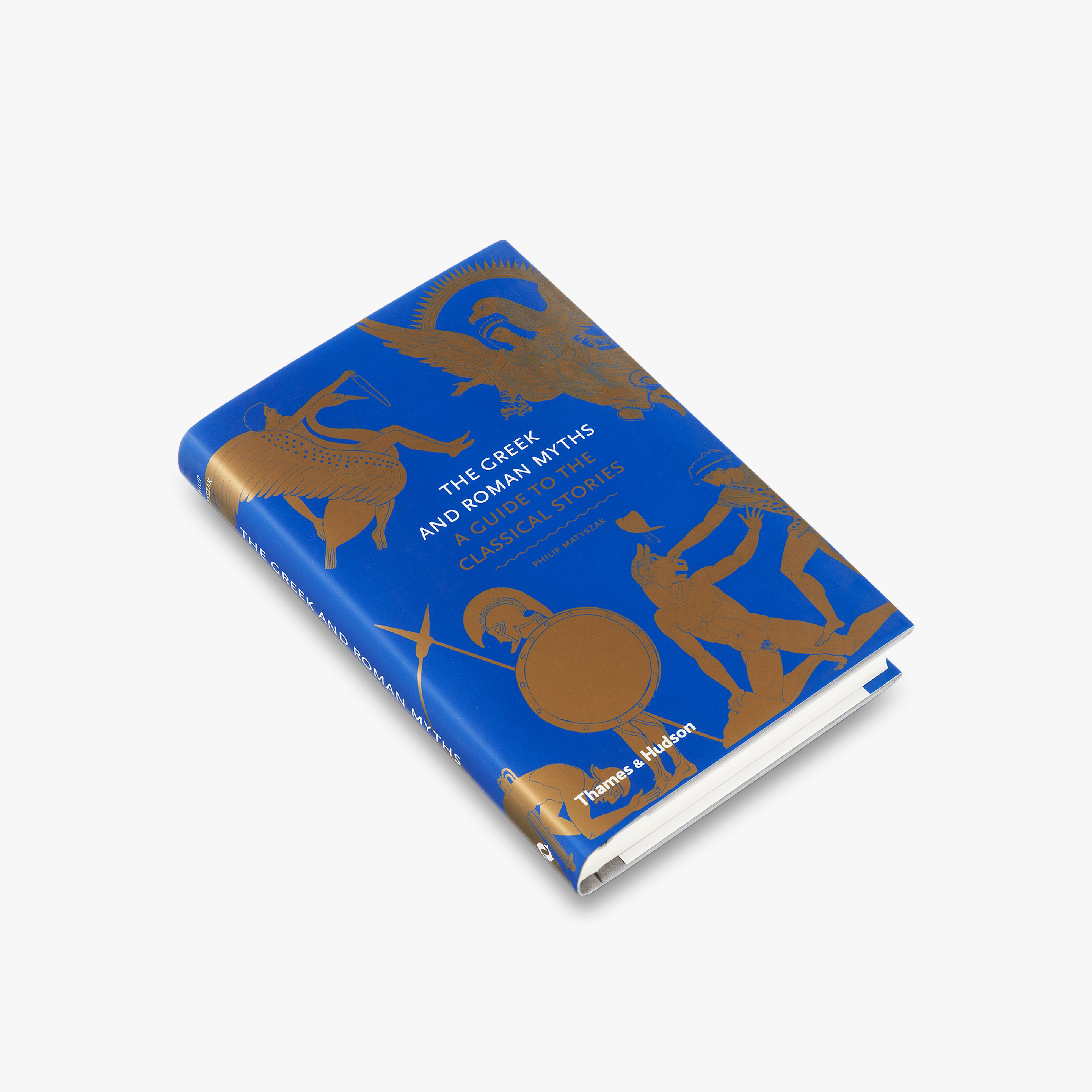
Nor did the epics ever claim to tell you everything. It’s a popular misconception, as Philip Matyszak points out in The Greek and Roman Myths, that the Iliad tells the story of the Trojan War. In fact it covers a single, admittedly eventful fortnight some nine years into the fighting.
The Odyssey, composed around the 8th century BCE, works the same way. It assumes you already know the wider web of stories, and delights in the crossing points: when Odysseus visits the underworld in Book 11, the outlines of the Oedipus story are already being sketched among the shades. These poems never tried to be the whole of Greek mythology; they assumed you knew the rest. Which makes the man at their centre a good place to begin.
What does Odysseus’s name actually mean?
Start with his name, which he owes to his grandfather’s bad temper. Asked to name the new baby, Autolycus reflected that he held anger against a great many men and women across the earth, and so called the boy Odysseus, 'The Angry One', after his own grudges rather than any quality of the child. The hero's other name arrived more painfully. Hunting boar on Mount Parnassus as a young man, Odysseus speared the animal at close quarters and took a tusk to the leg; the wound healed, but its scar, in Greek oulē, lingered in his second name: Ulysses.
You may also have heard that he was desperate to fight at Troy. Quite the reverse. Warned the war would drag on for years, Odysseus feigned madness, yoking an ox and an ass to a plough and sowing the furrows of the beach with salt. It was the wily Palamedes who called his bluff, lifting the infant Telemachus from his cradle and laying him in the ploughshare’s path. Odysseus reined in his mismatched team, accepted the inevitable and, as his puppy Argos whined behind him, set off for a war that would keep him from home for twenty years.

Jacob Jordaens, Odysseus and Nausicaa, 1630 –1635
The cunning that failed to keep him out of the war would eventually bring him through it, and its most celebrated flourish is also a joke. Trapped in the cave of the Cyclops Polyphemus, Odysseus gives his name as Outis, ‘No one’, so that when the blinded giant howls for help, his neighbours hear only that no one is attacking him. But in Greek the word could shift its form to mētis, which sounds like the word for cunning, the quality of Odysseus’ defining epithet polymētis. To the poem’s first listeners, the giant's baffled reply meant something like ‘if cunning is attacking you…’, which of course it was. It has a serious claim, as David Stuttard notes in Greek Mythology: A Traveller’s Guide, to being the first pun in western literature.
Artists got there almost immediately. A wine krater made around 650 BCE shows Odysseus and his men driving the great stake into the giant's single eye, and it carries a signature, Aristonothos, one of the first potters anywhere to put his name to his work. One of the earliest signed artworks in western art is already an Odyssey adaptation.
The land of the dead
The voyage home was crowded with such perils: the sirens, whose heavenly song Odysseus alone survived hearing, lashed to his mast while his crew rowed on with stopped ears; Scylla and Charybdis; an angry sea-god. But the strangest leg of the journey haunted the Greeks most of all. Where later heroes such as Aeneas had to climb down to the land of the dead, Odysseus simply sailed there, out across the encircling Ocean to its furthest shore, where he summoned the dead with sacrificed sheep and let the blood pool in a trench while the thirsty shades crowded round, desperate to drink.
What the poem says about the afterlife helped shape Greek belief for centuries. Menelaus is promised that he will escape the miserable lot of ordinary mortals and pass instead to the Elysian fields, where snow never falls and the west wind always blows: not a reward for anything he did, but a perk of the family he married into, since Helen’s father was Zeus.
As Mystery Cults in the Ancient World shows, the blessed afterlife later promised to initiates of the mystery religions looks remarkably similar, and rests on the same logic. Some readers have gone further and taken the whole poem as a parable, a journey from life through death to rebirth: an odyssey as much spiritual as geographical.

John William Waterhouse, Ulysses and the Sirens, 1891. Waterhouse borrowed his bird-bodied sirens from an ancient Greek vase in the British Museum
Penelope’s web
While he sailed, Penelope wove. Homer’s queen holds Ithaca together for twenty years, fending off a plague of suitors with her famous ruse: agreeing to remarry once she has finished weaving a shroud for Odysseus’ father Laertes, then unpicking her day’s work every night for three years until a maidservant gives her away. Even her name may be woven in, since one possible meaning is ‘Weft-Face', from the Greek for the weft thread on a loom.
That’s Homer’s version, and the film’s. The myths were rarely so tidy. Pindar claimed that Penelope slept with the god Apollo and bore Pan, the goat-legged god of the countryside, which rather complicates the portrait of perfect fidelity. And even within Homer the marriage is less symmetrical than it first appears: the couple are reunited only after the hero’s lengthy entanglements with Calypso and Circe, and a chaste but charged encounter with the princess Nausicaa. Twenty years is a long time, and the poem knows it.

Joseph Wright of Derby, Penelope Unravelling Her Web, 1785
The real Ithaca
Can you visit any of this? Here the myth meets the map, and the map argues back. There are really two Ithacas, the modern island of Ithaki and the Ithaca of the poem, and reconciling them has exercised readers since antiquity: the geographer Strabo worried over whether Homer meant Ithaki or Lefkas, Herodotus tried to anchor the Land of the Lotus Eaters in western Libya, and Apollodorus reports that some read the whole epic as a voyage round Sicily, with Scylla and Charybdis still commonly placed in the Strait of Messina. In the 1980s the explorer Tim Severin sailed a reconstructed Bronze Age ship through the possibilities, placing the first adventures in North Africa and Crete and most of the rest around the Ionian Islands.
Ithaki itself holds the most tantalising evidence. At Polis Bay in the island’s northwest, excavations in the 1930s uncovered the remains of twelve bronze tripod-cauldrons from the 9th or 8th century BCE; another had been found sixty years earlier, making thirteen in all, precisely the number King Alcinous gives Odysseus in Homer. Found with them was a fragmentary terracotta mask inscribed ‘A Prayer to Odysseus’. Whether or not this was ever the hero’s island, somebody on Ithaki was worshipping him there nearly three thousand years ago. If you go looking yourself, temper your expectations: the Cave of the Tripods has since collapsed. The poets, though, were not finished with the man they prayed to.

J.M.W. Turner, Ulysses deriding Polyphemus, 1829
How does Odysseus die?
The film ends where Homer ends, more or less. The mythology doesn’t. In later traditions, a prophecy declared that Odysseus would die at his son’s hand, and some versions of the story say that Telemachus was banished as a precaution. But Odysseus had another son: Telegonus, borne to him by Circe, who arrived at Ithaca years later in search of his father. Neither recognized the other. Odysseus took the newcomer for a pirate; Telegonus, believing he had landed on Corfu, treated the island as fair game for plunder; and in the fight that followed, Telegonus speared his father with the spine of a stingray. By the shore, as his muscles cramped, the hero’s life ebbed away.
The story comes from a fragment of a lost epic, the Telegony, and its ending is stranger still. The grieving Telegonus carried his father’s body to Circe’s island, along with Penelope and the recalled Telemachus; Circe made them all immortal; Telegonus married Penelope, and Telemachus married Circe. As Stuttard drily observes, ‘What happened next is lost even to mythology.’
If all this sounds like licence, consider: the Telegony was only doing to Homer what Homer had done to the singers before him. Adaptation is not a betrayal of the Odyssey but its oldest tradition. Aristonothos was reimagining the Cyclops within living memory of the poem’s composition; Roman painters turned the wanderings into vast landscapes in which the hero is almost lost among the rocks and sea; Waterhouse lifted his sirens from an ancient vase, and the line runs on through Joyce’s Dublin and Simon Armitage’s radio Odysseus to the IMAX screen. As Greek Myths that Shape the Way We Think reminds us, it was never really a line at all, but a web of retellings feeding on retellings, much as the oral tradition always had.
Somewhere near the beginning of it sits Demodocus, the blind singer at the Phaeacian court, holding his audience spellbound with tales of Troy. The faces lit up before him now flicker in the dark of a cinema, but the song, nearly three thousand years on, is recognizably the same…

Arnold Böcklin, Odysseus and Polyphemus, 1896
Explore the myths behind the film with Greek Mythology: A Traveller’s Guide by David Stuttard, The Greek and Roman Myths by Philip Matyszak, Mystery Cults in the Ancient World by Hugh Bowden Greek Myths that Shape the Way We Think by Richard Buxton and Greek and Roman Art by Susan Woodford.